 by
by 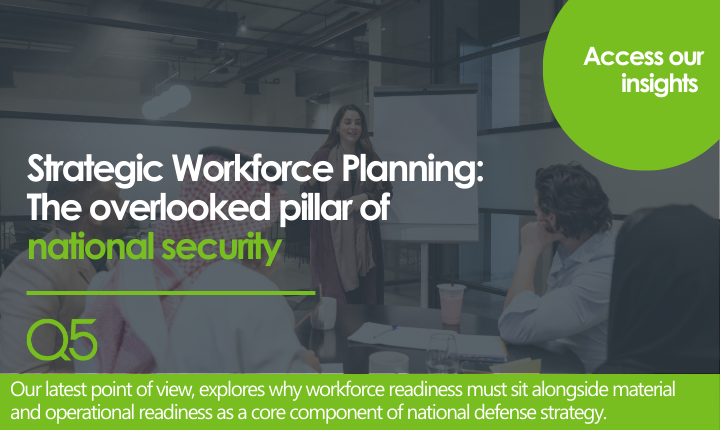
Defense transformation is often viewed through the lens of technology, procurement, and infrastructure. Yet without the right people, equipped with the right skills, in the right roles, at the right time, even the most advanced capabilities cannot deliver their intended impact.
Our latest point of view, Strategic Workforce Planning: The Overlooked Pillar of National Security, explores why workforce readiness must sit alongside material and operational readiness as a core component of national defense strategy.
As countries accelerate modernization programs, particularly across cyber, AI, and advanced systems, the competition for specialized talent is intensifying. Traditional recruitment and workforce models are struggling to keep pace. The paper examines why this gap exists, what lessons can be drawn from international experience, and how nations can move from reactive hiring to long-term, integrated workforce planning.
With a particular focus on Saudi Arabia and the ambitions of Vision 2030, the paper outlines how strategic workforce planning can support sovereign capability, reduce dependence on external expertise, and strengthen long-term national resilience.
This downloadable report provides:
- A clear case for elevating workforce planning to a national security priority
- International examples of integrated talent strategies
- A practical framework for forecasting, building, and sustaining critical capabilities
- Strategic recommendations for policymakers and defense leaders
As defense ecosystems become more technologically advanced and interconnected, the decisive advantage will increasingly lie not only in equipment — but in people.
Download the full paper to explore the insights and recommendations in detail.